Discovering an active bed bug infestation inside sleeping areas triggers immediate psychological distress and disrupted rest. Infestations are frequently established when Cimex lectularius is introduced via luggage,…
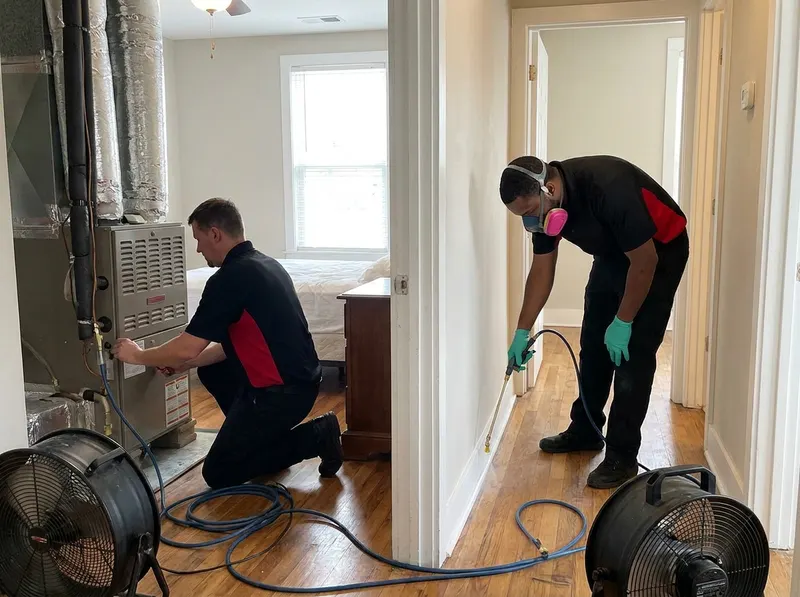
Discovering an active bed bug infestation inside sleeping areas triggers immediate psychological distress and disrupted rest. Infestations are frequently established when Cimex lectularius is introduced via luggage, used furniture, or shared transit corridors, quickly hiding within carpet tacks, wall voids, and subfloor junctures. Modern eradication avoids arbitrary pesticide broadcasting; instead, it relies on strict thermodynamic principles established by structural entomology. According to technical resources from the U.S. Environmental Protection Agency, effective remediation pairs non-chemical controls with targeted chemical products registered specifically for interior use. Bringing target interior spaces to lethal thermal thresholds between 120°F and 140°F denatures insect proteins within minutes, penetrating mattress cores and upholstered furniture frames that liquids cannot safely reach.
Residential architecture throughout Davidson County directly impacts how heat dissipates during remediation. In historic 1920s bungalows across East Nashville, Belmont-Hillsboro, and Inglewood, uninsulated exterior wall cavities and hardwood tongue-and-groove flooring present thermal escape routes that demand calibrated convection air movers to maintain uniform ambient temperatures. Conversely, modern multi-level builds in The Nations and Germantown feature drywall assemblies and complex shared plumbing chases that require physical containment monitoring to prevent insect migration into neighboring rooms. Guidelines published by the Centers for Disease Control and Prevention emphasize that incomplete heat penetration can cause bed bugs to disperse into deeper wall cavities, which is why technicians actively track thermal sensors across exterior sill plates and interior baseboards.
Dual-modality elimination combines this lethal heat with precise chemical applications along high-risk structural perimeters. While heat kills the standing population of adults, nymphs, and eggs immediately, it provides zero residual deterrence once structural cooling occurs. Research shared by the University of Tennessee Extension details that combining thermal remediation with EPA-evaluated residual products, such as desiccant dusts and microencapsulated formulations, creates a chemical boundary behind switch plates and subfloor gaps. These barriers neutralize any straggling insects emerging from non-heated structural voids days later. Data curated by the University of Kentucky Department of Entomology demonstrates that bed bug populations exhibit varying levels of resistance to traditional pyrethroids, making modern dual-action programs that incorporate physical desiccants like diatomaceous earth or silica aerogels structurally vital.
To ensure household safety, chemical selections prioritize indoor air quality and structural integrity. Product standards established by the National Pest Management Association inform application protocols around sleeping surfaces, ensuring products are applied only to crack-and-crevice voids rather than open mattress faces. Structural safety during heating cycles also complies with equipment guidelines from the Occupational Safety and Health Administration regarding electrical loads and temporary duct routing. The Tennessee Department of Agriculture oversees regulatory requirements for structural pest operators, ensuring chemical mixtures adhere to commercial label rates. Homeowners seeking documentation on building material heat tolerances can reference safety indexes from the National Fire Protection Association and testing standards from ASTM International, which evaluate thermal impacts on residential drywall, adhesives, and interior framing. IronMeadow Pest Relief conducts comprehensive diagnostic evaluations without requiring locked-in monthly fees, confirming that crawlspaces, attics, and living quarters receive verified eradication without aggressive corporate sales tactics. Technicians can be reached directly at (629) 319-7828 to review structural details and confirm site visits.
Every job gets a firm, written price after a free on-site visit.
Tell us about your bed bug thermal and chemical elimination job in Nashville and we'll send a clear, written quote, usually the same day.
 IronMeadow Pest Relief