Subterranean termite treatment in Nashville balances subterranean colony interception with crawlspace soil stabilization. Middle Tennessee sits directly within the heavy subterranean termite hazard zone mapped by the…
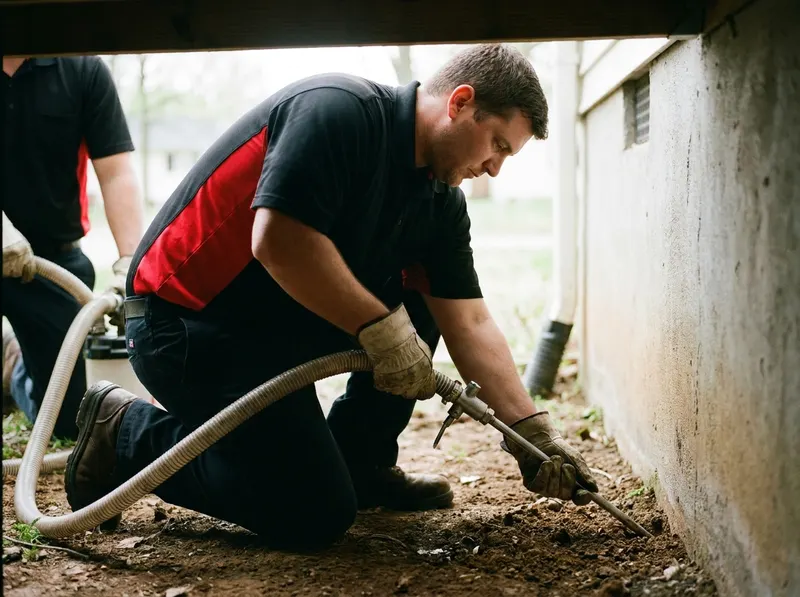
Subterranean termite treatment in Nashville balances subterranean colony interception with crawlspace soil stabilization. Middle Tennessee sits directly within the heavy subterranean termite hazard zone mapped by the USDA Forest Service. The predominant indigenous species, the eastern subterranean termite, requires constant contact with ground moisture to prevent desiccation. In historic residential neighborhoods such as Belmont-Hillsboro, Germantown, and East Nashville, older stone foundations and brick-pier crawlspaces lack modern vapor barriers, drawing worker termites directly toward damp sills and floor joists. Homes situated near high-moisture ecosystems like Shelby Bottoms Nature Center or the low-drainage limestone basins of Donelson and Crieve Hall experience intense colony pressure when subterranean moisture levels elevate following seasonal spring rainfall. Properties featuring concrete slab extensions common in Sylvan Park and The Nations face hidden entry points where expansion joints and plumbing penetrations provide direct wood access without external mud tubes.
Effective structural preservation relies on establishing an uninterrupted chemical or physical envelope around all load-bearing members. Traditional repellents simply redirect foraging workers to untreated gaps; modern liquid protocols utilize non-repellent transfer chemistry approved under EPA pesticide regulations. When worker termites traverse a treated liquid perimeter containing fipronil or imidacloprid, they carry micro-doses back into the subterranean gallery network, transferring the active agent throughout the colony via grooming and trophallaxis. For homes situated near sensitive watersheds or rock outcroppings close to Radnor Lake State Park, localized bait matrix systems certified by the National Pest Management Association offer a targeted alternative. These in-ground stations leverage chitin synthesis inhibitors like noviflumuron to disrupt the insect molting process, resulting in complete colony collapse without saturating native soils.
Execution requires specific diagnostic sequencing: 1. Technicians probe subflooring, sills, and bands across dark crawlspaces using digital moisture meters calibrated against ASTM standards to detect elevated dampness that encourages pest entry. 2. A continuous trench measuring 6 inches wide by 6 inches deep is excavated along exterior foundation walls and interior crawlspace piers as outlined by the Tennessee Department of Agriculture regulatory division. 3. Non-repellent liquid termiticide is pumped into the trench at a calibrated rate of 4 gallons per 10 linear feet per foot of depth, coating the soil substrate directly against masonry. 4. Attached concrete patios, porches, and garage aprons are drilled every 12 inches using carbide masonry bits to inject liquid barriers beneath slabs before sealing the access points with non-shrink hydraulic cement. 5. In-ground monitoring stations are set at 10-to-20-foot intervals across exterior turf perimeters to intercept foraging worker columns before they contact structural siding.
Selecting between full liquid barriers and subterranean bait networks involves structural trade-offs. Liquid barrier trenching delivers immediate, continuous protection along exterior footings, making it the appropriate choice when active termites are chewing load-bearing sills inside damp crawlspaces; however, it requires drilling through paved walkways and patios. Bait systems preserve pristine masonry work near ornamental landscapes like Cheekwood Estate and Gardens and eliminate indoor chemical applications, but bait consumption requires several months to achieve full subterranean colony elimination. IronMeadow Pest Relief performs structural examinations without contractual tie-ins, guiding homeowners in Green Hills and Inglewood toward the exact treatment envelope dictated by foundation construction, soil type, and drainage dynamics. Structural questions and site assessments are scheduled via IronMeadow Pest Relief at (629) 319-7828.
Every job gets a firm, written price after a free on-site visit.
Tell us about your subterranean termite treatment job in Nashville and we'll send a clear, written quote, usually the same day.
 IronMeadow Pest Relief