A brown recluse presence disrupts daily peace of mind, causing legitimate worry when specimens appear in bedrooms, closets, or laundry piles. Brown recluses (*Loxosceles reclusa*) thrive within Middle Tennessee's humid…
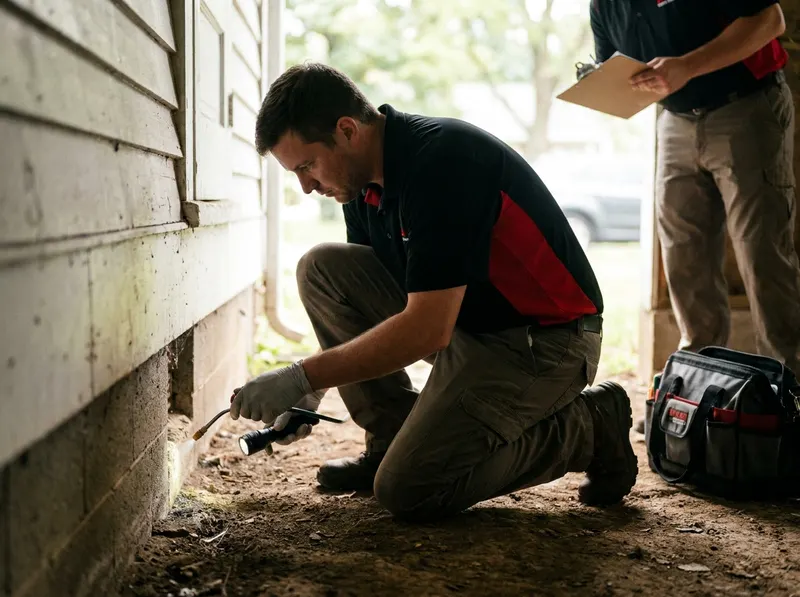
A brown recluse presence disrupts daily peace of mind, causing legitimate worry when specimens appear in bedrooms, closets, or laundry piles. Brown recluses (*Loxosceles reclusa*) thrive within Middle Tennessee's humid climate, establishing harborage inside dark, undisturbed structural cavities such as floor joists, vented crawlspaces, and loose attic insulation. Standard perimeter aerosol spraying routinely fails against these arachnids because their long legs keep their bodies elevated above treated horizontal planes, and their nocturnal hunting habits shelter them deep behind drywall. Comprehensive brown recluse management requires an agronomic and structural preservation approach that addresses underlying crawlspace moisture, cardboard storage attractants, and wall void travel corridors.
Effective mitigation relies on injecting specialized dust formulations into inaccessible voids where recluse populations shelter during daylight hours. Guidance from the University of Tennessee Extension emphasizes that controlling indoor clutter, sealing baseline foundation vents, and treating structural framing interfaces yield sustained population reduction. When treating subfloors and framing, technicians consult standards outlined by the Tennessee Department of Agriculture to apply targeted microencapsulated compounds along baseboards, band sills, and foundation walls. Because recluses consume secondary insects, suppressing underlying moisture-loving pests such as silverfish and booklice starves the spider population. Guidance from the United States Environmental Protection Agency confirms that targeted crack-and-crevice placements maximize indoor residual activity while minimizing household disruption. When crawlspace moisture is elevated, moisture-reduction measures aligned with the U.S. Department of Housing and Urban Development housing rehabilitation guidelines help preserve subfloor integrity and eliminate the damp microclimates these pests favor.
Treatment plans adapt to specific residential architectures throughout Davidson County. In historic stone-and-brick foundations across Belmont-Hillsboro, Germantown, and East Nashville, masonry gaps and floorboard clearances provide expansive harborage that requires dense application of insecticidal dust behind electrical plates and baseboard margins. In ranch-style homes situated in Crieve Hall, Donelson, and Inglewood, expansive ventilated crawlspaces demand dedicated soil-barrier treatments and band-sill sealing to intercept spiders migrating upward through plumbing penetrations. Modern builds in The Nations and Sylvan Park, as well as multi-story residences near Green Hills, often feature complex rooflines and multi-zoned attics where blown-in insulation shelters recluses near HVAC ducting. Research from the Journal of Integrated Pest Management highlights that monitoring with non-toxic sticky traps along floor-wall junctions provides vital diagnostic data, verifying capture counts and pinpointing specific nesting zones across every level of the structure.
1. Complete property assessment inspecting crawlspace band sills, attic rafter intersections, and closet perimeters to map active spider density.
2. Specialized application of desiccant dusts into structural wall voids, switch plates, and pipe entries where arachnids retreat.
3. Exterior perimeter defense establishing a targeted, pet-conscious liquid barrier along the outer foundation base, door thresholds, and garage perimeter.
4. Strategic installation of numbered monitoring boards to track population decline over a 30-to-60-day recovery timeline.
Deciding between an ongoing mitigation plan and a single-application treatment involves weighing infestation longevity against immediate containment needs. A single surface treatment provides rapid knockdown of visible adult spiders, but brown recluse eggs protected within silk sacs hatch weeks later, allowing juvenile populations to repopulate untreated voids. An intensive, multi-phase mitigation program includes dedicated void dusting, crawlspace inspection, and scheduled monitoring visits that intercept juvenile spiders as they emerge. Homeowners facing established structural infestations benefit from sustained multi-month monitoring, whereas newer homes with minimal, isolated sightings can often be managed through localized crack sealing and targeted perimeter stabilization. For transparent service planning, IronMeadow Pest Relief conducts on-site evaluations to verify exact structural needs before work begins, offering a $25 off a same-day pickup or initial service visit when scheduled during weekday operations.
Every job gets a firm, written price after a free on-site visit.
Tell us about your brown recluse spider control job in Nashville and we'll send a clear, written quote, usually the same day.
 IronMeadow Pest Relief